
News
Creator economy: who really earns (and why transparency in influencer marketing is a strategic choice)
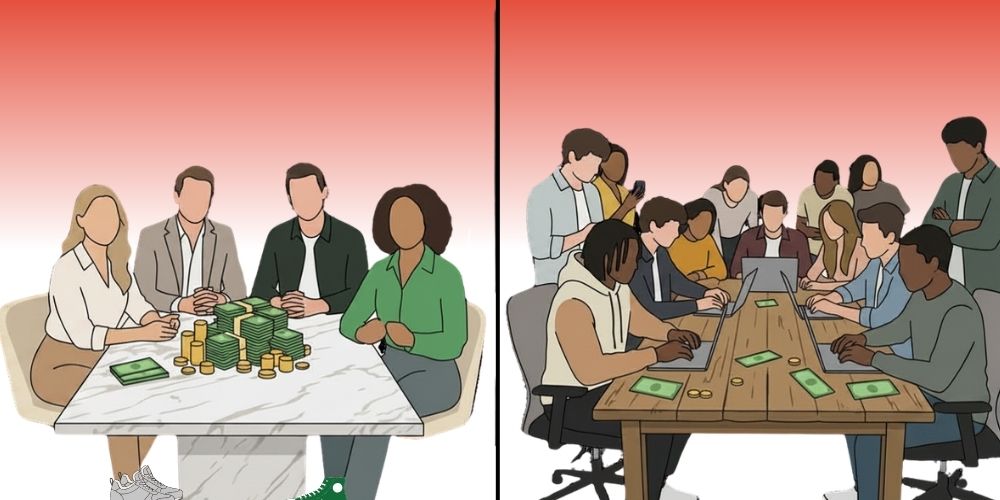
Earnings concentrated in a few hands, trust built over time: what changes for anyone designing collaborations with creators.
The creator economy is almost always told the same way: a gold rush open to everyone, where a good idea and a camera are enough to build an audience and an income. It is a seductive narrative, and partly true. What it hides is the more uncomfortable part: the numbers.
The myth of democratization and the reality of concentration
Look at how revenue is actually distributed and the picture shifts. The creator economy is an enormous market with earnings spread very unevenly: a minority of creators captures a substantial share of the value, while the majority works with modest figures, far from those of the most visible profiles. It is a dynamic that echoes other digital markets, where a few players sit at the top of the distribution and a long tail gathers below.
For anyone working in communications, the consequence is practical: treat the creator economy as an industry, with its asymmetries, its rules, and its responsibility to be transparent.
Transparency in influencer marketing as trust infrastructure
The concentration of revenue is bound up with transparency in influencer marketing. Who really earns from a piece of content? And does whoever pays for that content say so clearly?
Correctly identifying sponsored content is a professional practice in its own right. Accurate brand tagging, explicit signalling of the collaboration, and a sharp distinction between editorial and commercial content are by now established standards in the work of agencies that take compliance seriously.
Here is the point that often slips by: transparency is the infrastructure that holds up audience trust, an investment that protects everything else. An audience that knows when it is watching sponsored content keeps trusting the organic content too. Disguised sponsorship follows the opposite logic: a short-term gain, paid for with an erosion of credibility that lands on everything else.
From spontaneity to governance
The creator economy is going through the transition every sector experiences when it stops being a frontier and becomes a mature market: the shift from spontaneity to creator economy governance. That means clear contracts in place of informal deals. Verifiable metrics in place of inflated numbers. Defined professional roles in place of improvisation. And shared transparency standards in place of grey areas left to interpretation.
In Italy, the AGCOM influencer guidelines, the code of conduct and the official FAQs, together with the IAP Digital Chart, already set out a precise framework for the recognizability of commercial communications. Comparable frameworks exist in other markets, and any international collaboration should be measured against the rules of the jurisdiction it reaches.
For brands and for the agencies that support them, professionalization and transparency in influencer marketing are what separate a solid investment from a reputational gamble. The real risk sits upstream: building a collaboration that, told poorly or half-declared, turns against whoever promoted it. How you declare it counts for more than the follower count of the creator you choose.
Substance as positioning
The creator economy deserves a realistic, grown-up account. The reason is simple: it is an enormous sector, set to keep growing, and precisely for that reason the way we tell its story determines how far it can be trusted.
Who really earns, over the long run, is whoever builds transparent relationships: creators who declare, brands that respect the audience, agencies that treat transparency in influencer marketing as a positioning choice and as part of the strategy. In a concentrated market under growing scrutiny, substance makes the difference.
Building creator collaborations that hold up over time takes method: a clear editorial angle, correct disclosure, consistency with the communication strategy. If you are weighing a collaboration with a creator, or you want to check that your current activities meet the transparency standards the market expects, the MiRò Comunicazione team can support you in building that path.
FAQ- Creator economy
What is the creator economy?
It is the set of economic activities generated by creators and influencers through the content they publish on digital platforms: sponsorships, direct sales, subscriptions, licensing. It is a very large and growing market, with earnings distributed in a heavily concentrated way.
Why do most creators earn little?
Revenue distribution follows a power-law logic: a few creators, those with the largest audiences and visibility, capture most of the sector’s economic value. The majority operate on far smaller figures. It is a structural dynamic, common to many digital markets.
What does transparency in influencer marketing mean?
It means clearly and explicitly declaring when a piece of content is sponsored, drawing a firm line between editorial and commercial content. It includes accurate brand tagging, recognizable disclosure formulas, and consistency between what is communicated and what the audience perceives.
What are the Italian regulatory references on disclosure and sponsorships?
In Italy the matter is governed by the AGCOM guidelines dedicated to influencers and by the Code of Marketing Self-Regulation, with its IAP Digital Chart on the recognizability of online advertising. The framework is evolving: before any publication that cites thresholds, penalties, or specific cases, it is worth checking the most up-to-date version of the official texts.
Why does transparency benefit brands, not just creators?
Because it protects audience trust, the asset every future collaboration rests on. An audience aware that it is watching sponsored content keeps trusting organic content too. Disguised sponsorship produces a short-term gain against a reputational risk that falls on the brand’s entire communication strategy.

